

AREA TEMATICA: Hepatology
Background and aims:
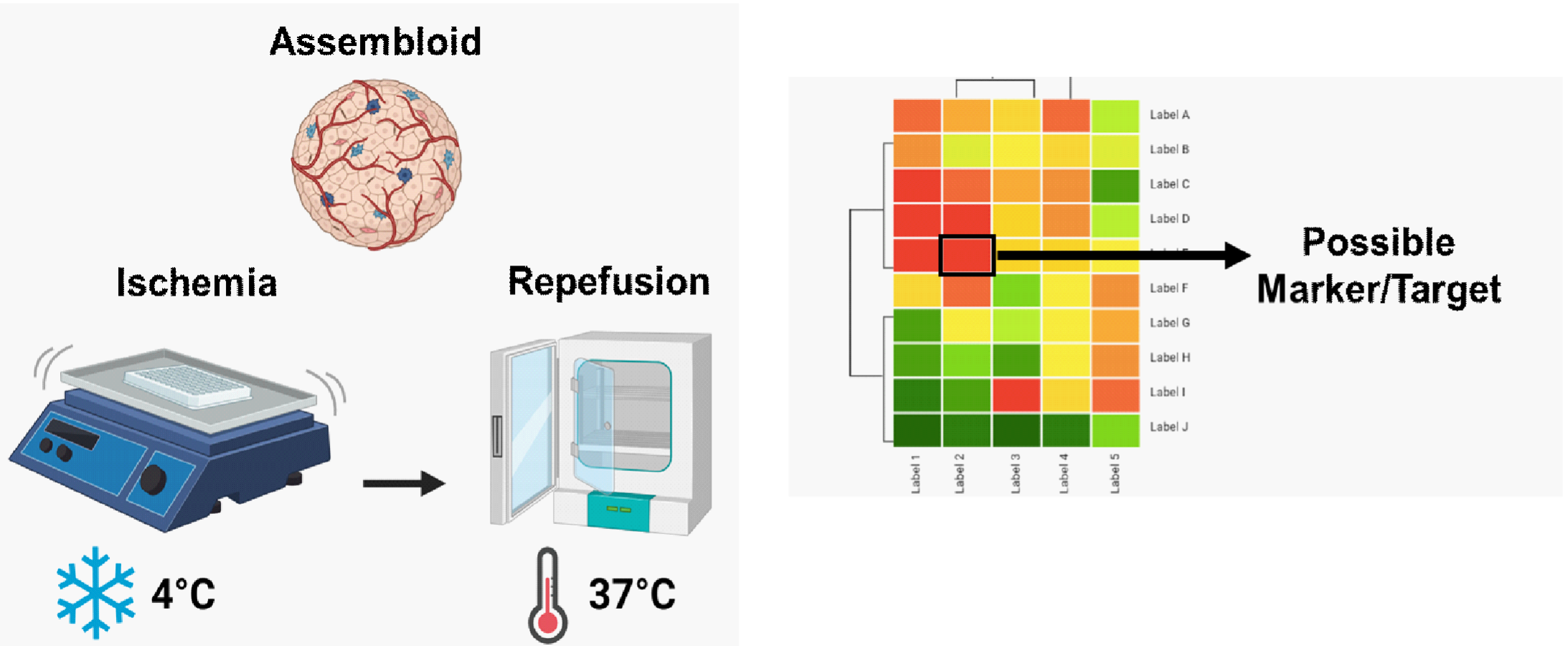
Ischemia/reperfusion injury (IRI) is a complex, multifactorial process that represents a major cause of liver graft dysfunction and failure following transplantation. Despite recent advances in machine perfusion, vascular injury and multicellular tissue response remain major determinants of irreversible graft damage, while the lack of physiologically relevant human models still limits the identification of effective targets [1]. The aim of this project was to generate a complex three-dimensional (3D) liver model by combining induced pluripotent stem cell-derived liver organoids (iPSC-LOs) with human umbilical vein endothelial cells (HUVECs) to create liver assembloids (iPSC-Asse). Following induction of an in vitro IRI model, RNA sequencing (RNA-seq) and validation analysis were performed to identify molecular pathways and novel candidate therapeutic targets that may improve the efficacy of machine perfusion strategies.
Methods:
human iPSC-derived liver organoids (iPSC-LOs) were generated using a matrix-free differentiation protocol and combined with human umbilical vein endothelial cells (HUVECs) to model hepatic assembloid (iPSC-Asse). Immunofluorescence and transcriptomic profiling by RNA-sequencing (RNA-seq) were performed to assess the maturation status of iPSC-Asse in comparison with tissue-derived liver organoids (TLOs). Subsequently, this 3D model was subjected to an in vitro IRI protocol [2], followed by comparative transcriptomic analysis to identify molecular pathways associated with injury response.
Results:
The incorporation of HUVECs into iPSC-Asse promoted hepatocyte maturation and enhanced liver-specific functions compared with iPSC-LOs. RNA-seq confirmed an active molecular interplay between the endothelial and parenchymal compartments, supporting improved tissue organization and functional maturation. Following in vitro IRI, comparative transcriptomic analysis uncovered distinct stress- and injury-associated molecular programs, including acute stress-induced senescence pathways [3], suggesting that senescence represents early and potentially reversible response to ischemic injury.
Conclusions:
iPSC-derived liver assembloids represent a physiologically relevant multicellular platform for modeling liver IRI. By integrating endothelial cells and parenchymal compartments, this system enables the identification of early molecular programs associated with tissue injury, including stress-induced senescence, providing a valuable model for mechanistic studies and the development of targeted therapeutic strategies to improve liver graft preservation.
VALUTA ABSTRACT
Vota ogni categoria
| Originality | |
| Clarity | |
| Rationale | |
| Objectives | |
| Endpoint measures | |
| Statistics | |
| Results | |
| Relevance | |
|
Media
|
|

|
|

