

AREA TEMATICA: IBD
Background and aims:
Patients with inflammatory bowel disease (IBD), particularly those receiving immunosuppressive or biologic therapies, are at increased risk of herpes zoster (HZ). Real-world evidence on HZ vaccine effectiveness is limited.We evaluated vaccine effectiveness in a large multicenter IBD cohort.
Methods:
In this multicenter cohort study (March 2023–January 2026), vaccinated adult IBD patients from nine referral centers were matched 1:3 with unvaccinated controls. Baseline demographic and clinical data were collected, and patients were followed for HZ reactivation from the index date. Reasons for non-vaccination were recorded. Propensity scores, based on age, sex, hospital, disease type, and therapy, were estimated by logistic regression, and stabilized inverse probability of treatment weighting (IPTW) was applied. Vaccine effectiveness was assessed using weighted Poisson regression and reported as incidence rate ratios (IRRs) with 95% confidence intervals (CIs).
Results:
A total of 1,744 IBD patients were included(1,278 unvaccinated and 466 vaccinated). Median age was similar between groups, with a balanced sex distribution. CD accounted for 46.5% vs50.3% of cases, while biologics was more frequent among vaccinated patients(67.9% vs54.4%).Overall, HZ reactivation occurred in 4/466 vaccinated patients(0.86%)and in 44/1278 unvaccinated patients(3.44%).The incidence rates were 0.29 and 0.69 per 100person-years, respectively.The incidence rate ratio was 0.42 (95%CI 0.15–1.15),corresponding to a crude vaccine effectiveness of 58.5%.Although point estimates suggested a protective effect, the confidence interval included the null value.By number of doses, HZ reactivation occurred in 0.60%of patients receiving two doses,1.49% of those receiving one dose, and 3.44% of unvaccinated patients.The incidence rates were 0.20, 0.50, and 0.69 per 100 person-years, respectively.Compared with unvaccinated patients, the incidence rate ratio was 0.29(95%CI 0.07–1.20) for 2 doses and 0.72 (95%CI 0.18–2.98) for one dose,corresponding to crude vaccine effectiveness estimates of 70.8% and 27.8%, respectively. Inverse probability of treatment weighting based on propensity score was applied to balance baseline characteristics between groups. After weighting, all standardized mean differences were <0.05, indicating adequate covariate balance.After propensity score weighting, vaccination was associated with a lower incidence of herpes zoster (IRR0.35, 95% CI 0.09–0.94), corresponding to a vaccine effectiveness of 64.6%.Among unvaccinated patients, the most common reason for non-vaccination was that the vaccine had not been offered(72.1%), highlighting a major gap in vaccine delivery.Other reported reasons were substantially less frequent and included concerns about adverse events(7.4%)and refusal of vaccination(5.3%).
Conclusions:
HZ vaccination reduced HZ risk in IBD patients, supporting current recommendations and identifying vaccine offer as the main barrier to uptake.
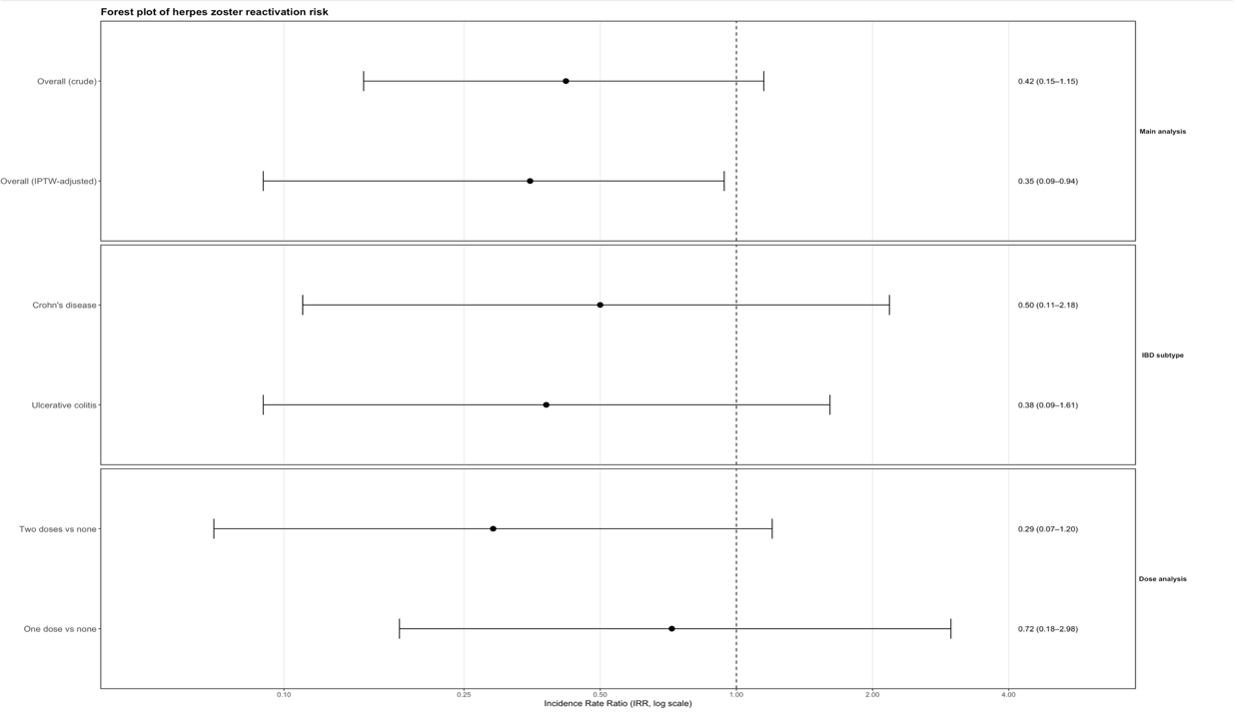
Figure 1: Forest plot of crude and weighted incidence rate ratios for herpes zoster reactivation according to overall population, IBD subtype, and vaccine dose number.
VALUTA ABSTRACT
Vota ogni categoria
| Originality | |
| Clarity | |
| Rationale | |
| Objectives | |
| Endpoint measures | |
| Statistics | |
| Results | |
| Relevance | |
|
Media
|
|

|
|

